NEWS
Assine nossa newsletter e fique por dentro de tudo que rola na sua região.

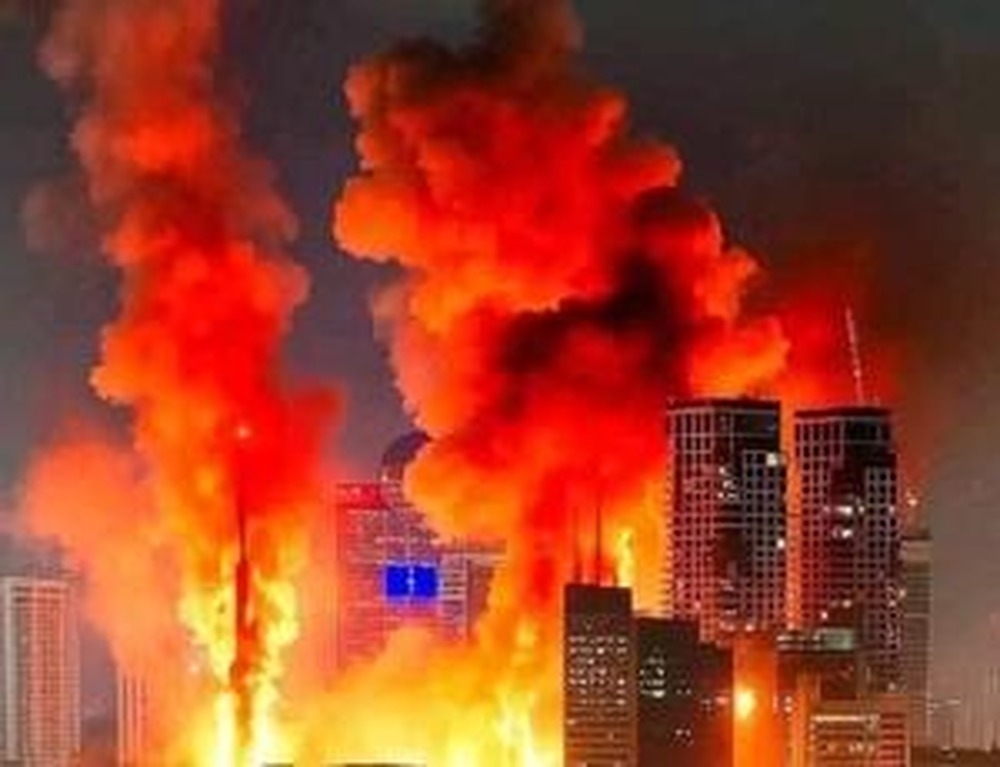
In the latest attack on Iran, Israel and the United States faced unexpected consequences. The offensive, backed by Washington with the deployment of Hellfire laser-guided missiles, triggered a heavy Iranian counterattack that challenged the military superiority of Tel Aviv and its allies.
According to the Middle East Eye, the U.S. sent approximately 300 advanced air-to-air missiles to Israel in March, suggesting tactical alignment for the operation. However, events unfolded differently than expected: Iran demonstrated a swift and powerful response capability, shooting down several F-35 fighter jets and neutralizing part of the Israeli offensive.
Iran Resists and Exposes Enemy Weaknesses
The Iranian retaliation also surprised the world by avoiding attacks on nuclear facilities, despite having access to their locations as per published documents, thereby respecting the Geneva Convention. In contrast, Israel was accused of targeting such areas and civilians, including residential areas and the Tehran Children's Hospital, raising concerns about future escalations in the conflict.
The strategic impact was also significant. The attack reinforced internal unity among the Iranian population and solidified regional Islamic alliances. Furthermore, Russian air defense systems, which had been targeted by a cyberattack, recovered quickly and operated effectively, highlighting their relevance in the global military landscape.
The biggest winner in all of this was Russia, which continues to advance further into Ukrainian territory due to the international focus shifting away from that conflict, much to the dismay of those leading the European Union, which is increasingly weakened by its misguided, submissive decisions to Western economic groups.
Repercussions in the United States
Within the U.S., public support for Israeli actions proved less significant than anticipated. A Fox News poll revealed that only 45% of Americans would support a targeted airstrike against Iranian nuclear facilities, while 37% oppose it and 18% remain undecided. These figures indicate a societal division on U.S. military involvement. Recent previous polls had indicated over 73% support. This suggests either that those polls were poorly conducted, or that this action caused thousands to rethink after the attacks.
At the same time, U.S. domestic politics are in great turmoil. Anti-Trump administration protests are intensifying in the streets, leading to collapses, and analysts like Tucker Carlson harshly criticize the government, stating that the Middle East war benefits corporate groups at the expense of peace and the American people themselves. Carlson warned that these attacks would lead Tehran to accelerate its nuclear program, just as North Korea did after American threats. He also stated that America is increasingly isolated: "We are no longer seen as peacemakers, but as interventionists obsessed with global control." He also declared, "Israel attacks, Trump approves, Iran arms itself, and the world is closer to the abyss."
Republicans and Democrats in the U.S. are doing the same as Israel's command: going "all in." It's obvious that these internal protests are not entirely organic and bear the fingerprints of Democratic groups, even though they could lead to a civil war, given that the American people, once united, are increasingly polarized and are highly armed citizens due to the indiscriminate internal policy of arms liberalization to civilians. The vast majority of Republican congressmen publicly supported the attack on Iran, drawing much criticism for prioritizing external over internal interests.
To make matters worse today, a Minnesota lawmaker and her husband were killed at their residence in a "politically motivated assassination," according to Governor Tim Waltz, while state Senator John Hoffman and his wife were injured in a separate but possibly linked shooting, police reported. All were Democrats.
And Trump is increasingly distancing himself from MAGA, ceding to his strongest campaign financiers, disappointing a large portion of his voters and supporters with his foreign policy, the opposite of what he promised.
Netanyahu and the Strategy of War to Stay in Power
Netanyahu has a history of using external conflicts to deflect attention from domestic problems. Before the attack on Iran, he already faced strong international pressure due to the war in Gaza and accusations of war crimes with an ICC arrest warrant request, in addition to accusations of major internal corruption. With his popularity plummeting and his political base fragmented, the offensive against Tehran may have been an attempt to unite Israel against a common enemy and avoid his own ouster.
According to documents presented by international newspapers, these suggest that negotiations for suspending the nuclear program proposed by Trump could have been a smokescreen to distract those involved in the East while they armed the attack. After Israel's attack on Iran, Putin spoke with his Israeli counterpart on the phone in a harsh tone, because the attack was initially launched at a moment when representatives from the USA, Israel, Iran, and Russia were physically discussing details of a possible agreement at a negotiating table, making it sound like a betrayal.
The outcome of the confrontation was not favorable to the aggressors. Israel and the U.S. demonstrated military and political vulnerabilities. The Israeli Iron Dome, so widely touted as a marvel, proved substantially incapable of holding back Iranian missiles, being quickly saturated. The action, which could have strengthened Netanyahu and Trump in their respective political scenarios, ultimately generated the opposite effect: international criticism, regional instability, and growing internal opposition. Iran is not Gaza; it is Persia.
With this, the Israeli offensive reveals a harsh reality: in the face of a determined adversary and poorly calculated moves, hasty attacks can be costly. Or did they already know this and proceed anyway?
Iranian Counterattack: A Swift and Coordinated Military Response
Iran demonstrated a surprising response capability even with severe losses of its top commanding officers: neutralizing part of the Israeli offensive and proving its military strength. The initial attack not only failed to achieve its strategic objectives but also generated a precise and calculated retaliation that revealed its adversaries' vulnerability.
Despite the Israeli offensive being heavy and unannounced, momentarily disabling defense systems, Iran managed to reorganize its forces efficiently in a short period of time. The Iranian response primarily involved:
Downing of Stealth F-35 Fighters
Two aircraft were shot down within Iranian territory, raising doubts about the real survivability of the aircraft against state-of-the-art defense systems. Furthermore, one of the pilots was captured, intensifying the political and military impact of the retaliation.
Russian Defense Systems Fully Operational:
After being compromised by a cyberattack, the sophisticated S-300 and S-400 anti-aircraft systems were quickly reconnected and operated with full effectiveness, reaffirming their unique power on the battlefield.
Use of Ballistic Missiles Instead of Hypersonic
Although Iran possesses advanced capabilities, it opted to use conventional missiles. Nevertheless, the damage caused by the attacks showed that its ballistic technology is highly effective.
Downing of the Israeli "Pentagon"
An Iranian missile devastated the headquarters building, causing many other significant damages to military installations and cities across the country.
The arsenal used so far was from the Revolutionary Guard (500 missiles in 5 waves of 100), while heavy drones and other weapons from the Armed Forces' arsenal are yet to be deployed.
The Iranian response had repercussions beyond the military field. On national territory, the attack reinforced internal unity among the population and strengthened a spirit of resistance against external interventions. Regionally, the action solidified alliances with Islamic groups and expanded support for the Iranian position in the Middle East.
Internationally, Iran's response contributed to a reassessment of Western military power and American support for Israel. Military analysts are now discussing the vulnerability of stealth aircraft and U.S. and Israeli defense systems in the face of adaptable and resilient strategies. Iran, under extremely worse conditions and practically without external support, faced 8 years of war with Iraq in the 1980s, which was a proxy for Western countries at the time that provoked the conflict. Yemen stands strong after numerous frustrated attempts by the West via land, air, and sea, despite having infinitely inferior military power to Iran.
The Iranian retaliation demonstrated that, even under a surprise attack and with severe initial losses, Tehran possesses the organizational and strategic capacity to react devastatingly. More than just a military response, the Iranian action sent a clear message: the country is prepared to face offensives and will not accept attacks without retaliation.
Israel and the U.S., who expected a precise and destabilizing blow, ended up facing a determined, disciplined enemy capable of quickly restructuring itself, making it evident that an attack on Iran will never be an easy mission or without severe consequences.
Now, the hypothesis of the Iranian regime's downfall is zero. For those who believe that a cleric governs Iran, as Western media has led us to believe since 1979, know that you have been deceived: a military junta has commanded and always controlled everything in that country ever since.
The elected president practically only handles internal administrative matters. And Israel's attack killed the head of Iran's Revolutionary Guard. Nothing more than the commander of the junta, generating even more hatred towards the West from its population and practically little change in its defense capabilities, as demonstrated in the counterattack.
The Attack as a Political Maneuver?
The offensive against Iran occurred at a critical moment: just one day before, the Israeli parliament was almost dissolved. Bibi Netanyahu narrowly avoided his fall, but his position remained fragile. The war, therefore, served as a distraction and an attempt to consolidate his power.
Netanyahu's and Israel's Future
Despite Netanyahu's attempt to cling to power, the offensive against Iran could have unpredictable consequences. The Iranian response was swift and effective, exposing military vulnerabilities of both Israel and the U.S. Furthermore, the war could deepen the internal political crisis, especially if religious parties decide to break from his coalition. And the entry of friendly countries into the conflict, like the U.S., could lead to a global catastrophe, with the use of nuclear weapons.
Netanyahu's strategy might have worked in the short term, but in the long run, Israel could face even more internal and external instability, in addition to its severe financial problems, similar to the U.S. If his political base continues to fragment and international pressure increases, he might not be able to sustain his government for much longer. Besides, Israel is no longer an untouchable island: missiles hit civilian areas and caused much damage. Israelis are no longer as protected as before. Bibi failed in this regard.
The support for the attack on Iran by high-ranking European leaders increasingly shows that they may be puppets, confirming what many historians affirm: that great world wars only occur when mediocre leaders are in command, obedient to those who put them in power in countries captured by corporate oligarchies—lessons that China and Russia learned from history, and thus closely monitor their billionaires, to prevent their personal interests from superseding those of the state.
Questions that Israel, Europe, and the U.S. must answer if they wish to continue the conflict:
Can Israel withstand a long war with the Muslim world?
Can they endure high levels of mineral commodities in general, as a consequence of this type of conflict?
Can the U.S. fight on two war fronts: Ukraine and the Middle East?
The 50-minute conversation between Trump and Putin likely led both to the conclusion of non-interference in the conflict, bearing in mind that Iran and Russia have a mutual protection pact. Iran also has the same agreement with North Korea and Pakistan, two nuclear powers.
Was all this worth it to keep Bibi in power?
As Scott Ritter recently stated: "Israelis must choose between Israel and Bibi; at this juncture, both cannot exist."
Did they choose Bibi? And now?
Nenhum comentário. Seja o primeiro a comentar!