NEWS
Assine nossa newsletter e fique por dentro de tudo que rola na sua região.

The 2026 elections will find their fullest democratic expression at the ballot box. But the political construction that precedes the vote begins long before the electoral calendar. It is already under way every day on social media, in WhatsApp groups, in religious environments, in family conversations, in the press, in digital content, and the many spaces where information, opinion, and interpretations about the country circulate. Understanding this environment is now a central task for anyone thinking about political strategy and public communication in Brazil.
In recent years, the formation of public opinion has undergone a profound transformation. Political debate is no longer concentrated in traditional media; it has become distributed, fragmented, and permanent. The press continues to play an important role in public mediation, but it no longer organizes the political agenda on its own. It now coexists with influencers, independent creators, opinion channels, digital communities, closed messaging groups, and continuous flows of sharing and recirculating content. This shift has changed not only the speed of information, but also the way it is perceived, interpreted, and socially absorbed.
The advance of artificial intelligence accelerates this process even further. Large-scale production of texts, videos, images, memes, and narratives increases the volume of political content circulating online and intensifies the fight for attention. At the same time, this scenario makes it more complex to monitor and critically interpret what is circulating. But despite the technological dimension of this transformation, the core of political communication remains essentially human. Tools expand reach. Technology speeds up processes. None of them replaces the ability to read social reality, political sensitivity, or the ability to build rapport with the public.
That is precisely why the debate on electoral communication in 2026 must go beyond technique. It is not only about understanding algorithms, mastering formats, or expanding digital presence. There is an earlier, deeper layer that structures contemporary political competition: the struggle over narrative.
Over the past several years, the culture war has stopped occupying a peripheral position and has come to structure an important part of the public dispute. More than an ideological or moral clash, it has become a contest over the interpretation of reality. It is a struggle to define which values gain social legitimacy, which symbols mobilize collective belonging, which emotions organize political debate, and which perceptions come to shape the public's reading of the country.
This dynamic helps explain why certain themes continue to mobilize Brazilian society so intensely. Faith, family, security, order, conservatism, indignation over corruption, criticism of economic privileges, a sense of institutional abandonment, a desire for stability, and anti-establishment thinking do not appear merely as circumstantial electoral agendas. They function as frameworks for interpreting reality. They help millions of Brazilians name their anxieties, organize priorities, recognize problems, and shape their perceptions about politics and the future. That is precisely why progressive movement cannot afford to give up these themes.
They are often still approached with discomfort by left-wing parties, as if addressing them automatically meant adhering to the right-wing’s agenda. But that produces an important political blockage. None of these values naturally belongs to a specific ideology. They cut across citizens’ social lives and are part of the population’s experience. When the progressive movement stops addressing them, they do not disappear from public debate. They continue to circulate, but they are interpreted and narrated almost always through a single political framing.
At the center of this issue is the public’s feelings. Political communication only reaches people when it engages with the issues through which they interpret their own lives and in which they feel represented. Public opinion is not formed only through the circulation of information or the rational presentation of policy proposals. It is also built through recognition. People connect politically when they feel their concerns are being named, that their values are being understood, and their lived experiences taken seriously within public debate.
When that does not happen, a void of representation emerges. And that political void rarely remains empty for long. It tends to be filled by whoever can transform social feeling into political narrative.
That is why communication must welcome. Welcoming, in this context, does not mean agreeing with every dominant perception or giving up the progressive movement's historical principles. It means recognizing that there is a social experience that must first be heard before it can be politically contested. It means understanding that no one builds connection through a language that invalidates their everyday experience or treats their references with contempt.
Welcoming faith does not mean instrumentalizing religion, but recognizing that spirituality, hope, transcendence, and community are part of the life and cultural identity of millions of Brazilians.
Welcoming the family does not mean restricting it to a single model, but recognizing that care, affection, protection, and belonging still profoundly organize social life. Welcoming the demand for public safety does not mean embracing punitive approaches, but understanding that fear of violence shapes everyday decisions, alters routines, and requires concrete public responses. Welcoming anti-establishment sentiment does not mean rejecting democratic institutions, but acknowledging that there is accumulated institutional exhaustion, a sense of distance, and genuine frustration with formal structures of political power. Without that welcoming, communication distances itself from people. And when it distances itself, it loses its capacity for dialogue.
This disconnection also shows up in the way public policies are communicated. Too often, we still communicate from an institutional structure, while a large portion of the population perceives politics through its direct effects on everyday life. Public debate rarely begins with the abstract defense of a public policy. It begins with real life experience, at the front line: in medicine that is missing or finally available at the pharmacy; in rising cost of food; in a child who needs to be protected at a full-time school; in public transportation delays; in violence in the neighborhood; in the household budget it no longer add up by the end of the month. It is in this space that public policy becomes a reality. And it is the space that communication must know how to operate.
The digital environment makes this need even more evident. Amid informational overload, hyperproduction of content, and the rise of artificial intelligence, there is also growing appreciation for authenticity, for direct speech, and for what generates trust and identification. This shows that despite all technological transformation, political communication remains deeply tied to credibility, recognition, and the ability to build social bonds.
Given this scenario, the challenge for progressive communication in 2026 cannot be reduced to digital presence, technical mastery of platforms, or expanding reach. The core of the dispute is increasingly tied to the ability to understand the country’s cultural codes, interpret the social mood of the present, and build narratives capable of connecting political projects, everyday life and collective belonging.
The electoral dispute will be shaped by algorithms, artificial intelligence, and profound transformations in the digital ecosystem. But above \all, it will remain a contest over how social reality is interpreted. A contest over who can read the country better, recognize its contradictions, understand its prevailing emotions, and build political language from themes in which people see themselves represented.
It is at this point that communication once again takes on a central strategic role. Not only as a tool for dissemination or a campaign instrument, but as a permanent space of mediation between politics, society, and the social imagination. And it is precisely this capacity for listening, recognition, and narrative-building that will shape an important part of the communicative strength of Brazil's progressive movements in the coming years.
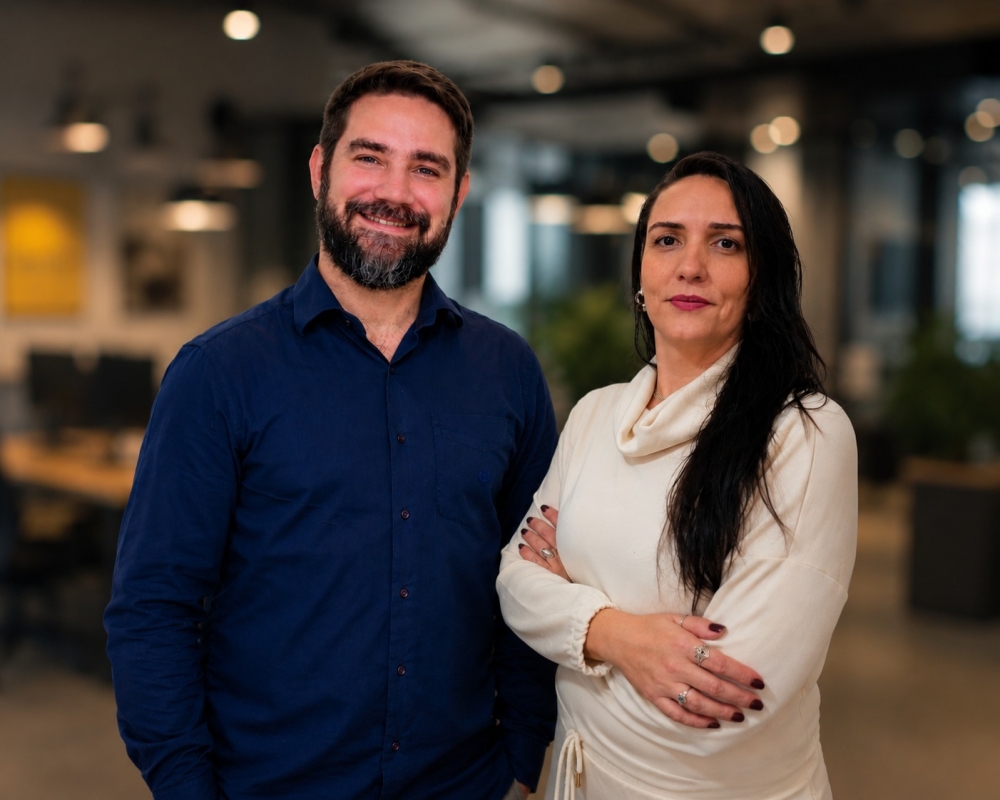
About the authors
Marcela Canéro is a cultural journalist, communications strategist, as well as master’s student and researcher in Culture and Territorialities at the Universidade Federal Fluminense (UFF). She holds a specialization in Strategic Marketing Management.
Paulo Loiola is a political strategist, co-founder partner of BaseLab and founder of PerifaLab, with extensive experience in political marketing and consulting for progressive campaigns in Brazil.
Originally published in Revista Fórum.
Translated into English by Carolina Grobberio.
Nenhum comentário. Seja o primeiro a comentar!